

Methane in dairy farming – challenges and solutions
Currently, milk producers face a number of challenges. High production costs and rising feed prices constitute a significant burden for the sector. Additionally, the decline in milk prices on the market deepens the financial difficulties for producers. Lack of workers in agriculture is also a significant problem, hampering business continuity. Moreover, increasing climatic requirements, including reductions in methane emissions, pose additional challenges to milk producers.
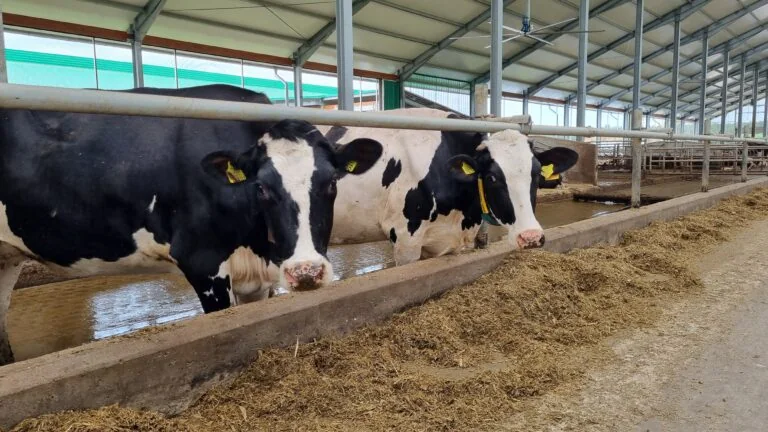
Milk production has increased significantly in recent decades thanks to better management and genetics, which have improved feeding efficiency and reduced costs. Unfortunately, milk production also has negative effects on the environment. This is mainly related to methane (CH4) emissions, which are related to the fermentation process of microorganisms in the animals' rumen. This means that the greenhouse gases cows emit during digestion - especially methane - have a major impact on global warming.
Methane is a powerful greenhouse gas with a global warming potential that is as much as 28 times greater than that of carbon dioxide (CO2). It is produced in the intestines and rumen of cows and from the decomposition of manure, which accounts for 20% of total methane emissions from ruminants. Intestinal secretion accounts for as much as 80%.
The digestive system of ruminants is adapted to efficiently digest plant materials. Ruminal archaea, i.e. microorganisms that use hydrogen and carbon dioxide to produce methane and water, play an important role in reducing metabolic excess in the rumen, and the methane obtained as a result is an inevitable product of the process.
For these reasons, there is great interest in research aimed at reducing intestinal methane emissions by dairy cattle.
Register!The entire livestock sector is responsible for 14.5% of total global greenhouse gas emissions, of which dairy cattle account for 18.9% of these emissions, mainly due to intestinal methane secretion.
Greenhouse gas production
An important topic of discussion nowadays is the greenhouse effect and, above all, its effects on us and future generations.
Scientists emphasize that the causes of global warming and the greenhouse effect are very diverse, but they always emphasize the enormous impact that greenhouse gases - such as methane and carbon dioxide - have on the deterioration of the atmosphere. They may come from natural sources, e.g. resulting from volcanic eruptions, desertification of areas, deforestation or gas emissions from swamps.
However, the human contribution to climate change cannot be ignored. Electricity production, home heating, and even transport - all of them constitute about 60% of all sources of greenhouse gases.
Ruminants, i.e. animals such as cows or sheep, emit more gases into the atmosphere than animals referred to as "monogastric", i.e. those that have only one stomach chamber. This is due to the fact that the digestive system of ruminants is adapted to digest difficult carbohydrates (e.g. cellulose), thanks to the fermentation process. Microorganisms in their system produce methane and other volatile organic substances, called "digestive gases".
In addition to products that are produced in the digestive tract, there are also those that come from daily excreted animal feces. Such undigested organic substances in feces and urine are an ideal environment for bacteria that produce methane and various nitrogen compounds.
The principle of proportionality also applies here - the more milk a cow produces, the less methane it emits for each kilogram of milk. However, regardless of the amount, the cow still generates a certain amount of CH4, which results from its physiological needs related to survival.
Methods for measuring methane emissions
Measuring methane emissions from large numbers of cows can be challenging. Methods such as the use of respiratory chambers (RC) are very expensive and inefficient, so they are usually only used in research studies with a limited number of animals. They are considered the most reliable method, but it is difficult to compare them with other methods because measurements cannot be carried out for one cow at the same time. There are cheaper and higher throughput methods such as SF6 or GreenFeed that are suitable for use in pastures and extensive farming, but their costs are too high when testing large numbers of animals. Methods based on methane concentration are less precise than flux methods, but are useful for larger-scale measurements, which are needed in genetic assessments. Research is still needed to improve the accuracy of these methods.
Indirect indicators such as those measured in milk, although less accurate, are simpler and cheaper to use. They can help assess which cows produce less methane, helping to breed more environmentally friendly animals.
There are therefore various methods of measuring methane emissions, which have their advantages and disadvantages. Some are more precise, others are cheaper and easier to use, but none is 100% perfect. Research to improve these methods is still needed.
Why is the condition of cows so important?
When managing cattle herds, you should always pay attention to their condition. In the case of dairy cows, the Wildman scale, also called BCS (Body Condition Scoring), is often used for assessment. It has 5 levels and allows for a subjective description of the energy resources that a given animal accumulates in its fat and muscle tissue, and is also considered the best way to monitor the proper nutrition of cows. Such a system provides recommendations on how to achieve the appropriate animal condition for various factors such as age, performance, purpose or physiological condition, and even economic aspects. In this way, you can avoid serious problems with the health of cows, the treatment of which can be extremely expensive.
The period of the production and reproductive cycle is also important in the context of adjusting the condition of cows. The ideal one is one that ensures optimal milk production, reduces the risk of health and reproductive problems, and what's more - maximizes economic benefits.
Feed composition analysis
In modern animal breeding, proper nutrition is of key importance, which accounts for approximately 70-80% of the total costs of animal production. For feeding to be effective, they must cover the cattle's needs for energy and other nutrients in amounts and proportions adapted to their needs. Both excess and deficiency of any of them can have a very negative impact on production efficiency, significantly reducing the efficiency of feed use and reducing the quality of the products themselves.
The nutritional needs of animals vary depending on many factors - species, breed, age, body weight, physiological state and even intended use. They are also influenced by breeding work, which aims to increase the growth rate, improve feed utilization and increase milk production.
Feed ingredients differ in terms of nutritional value, digestibility, energy content, protein quality, and ability to meet the needs of animals. The chemical composition and nutritional value of feed also depend on many factors and can therefore vary significantly. These changes are particularly visible when we look at plant-based feed, the quality of which is influenced by climate, soil type, fertilization method, plant variety, ripening stage, and harvesting method. Post-harvest activities are also key - such as drying, fermentation, pressing or storage. Industrial feeds, which are a by-product or sometimes the main product of various technological processes, also form a diverse group, and their chemical composition depends on the type of raw materials and technologies used.
It is important not only to understand the nutritional needs of individual animals, but also to properly assess the nutritional value of available feed ingredients, which may come from plants, animals or be mineral substances. It is important that these ingredients are easily digestible. Optimal satisfaction of the nutritional needs of animals through knowledge of their requirements and the nutritional value of feed guarantees success in animal production.
Register!New trends in feed additives
Several key areas related to feed additives can be distinguished.
One of them are substances that help better use nutrients from feed, especially those delivered to the rumen, such as roughage. It is worth emphasizing that the use of new strains of live yeast cultures supports the fermentation process in the rumen and that adding probiotic yeast to the diet of ruminants is beneficial because it promotes the development of cellulose-degrading bacteria. Additionally, this yeast helps maintain a stable pH in the rumen and prevents acidosis, i.e. acidification of the rumen.
When managing cattle nutrition, it is important to carefully tailor the diet to the needs of individual groups of animals on the farm. Precise nutrition is based on the use of information sources available to farmers, their analysis and application based on the obtained effective solutions that increase the profitability of milk production. The basic source of data here are reports from the Polish Federation of Cattle Breeders and Milk Producers. In addition, herd management systems can be used as a tool for daily collection of information about animals, which are often integrated with milking systems on farms, but can also function independently.
FPCM - Fat and protein corrected milk
If research is carried out on a farm, the basis for measuring productivity is one kilogram of milk, which contains adjusted protein and fat content - called FPCM milk (Fat and protein corrected milk). It is ready for sale on the farm in the country where the study was conducted. The use of FPCM allows for an objective comparison of farms that differ, for example, in methods of breeding and feeding animals. FPCM can be calculated using a special formula in which the amount of milk produced is multiplied by the ratio of the energy of milk from a given farm (or region) to the energy of standard milk with 4% fat and 3.3% protein.
Sometimes standard milk may require a change in composition - in such a case, a special energy equation can be used to calculate the new standard. Later, this equation is used to recalculate the FPCM. In turn, the lactose content in milk is constant and amounts to 4.85%.
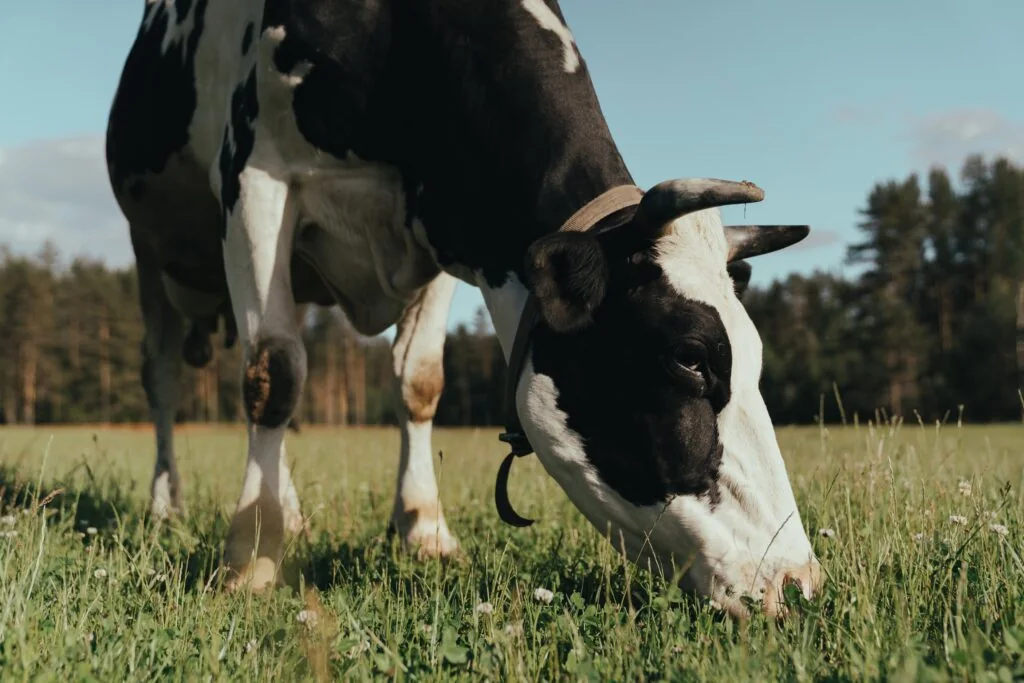
Methane from the gut is responsible for 17% of global CH4 emissions and 3.3% of total greenhouse gas emissions from human activities.
Biomix Smart Reducer
The main goal of the Biomix sp. z o. o. project is to create a mineral and vitamin supplement for ruminants, which is intended to reduce the production of methane in their rumens. The project team plans to develop modern technology and a unique formula of this additive, which will be called "Biomix Smart GC Reducer". It will then be tested and rolled out to dairy farms.
Animal farming is responsible for 18% of global greenhouse gas emissions, more than transport emissions, which are 14%. Ruminants such as cows are responsible for approximately 40% of methane production through rumen fermentation, where they convert low-energy feed into high-energy milk. On average, a cow emits about 100 kg of methane per year. Reducing these emissions is crucial because methane from fermentation in the rumen reduces feed efficiency and increases animal maintenance costs by up to 12%.
The new product aims to reduce energy losses in the rumen by reducing methane production by microorganisms. The effects of its use include better feed utilization by animals, increased milk production, improved reproduction rates and animal health, and even a lower risk of ketosis. The supplement works by increasing the availability of energy from feed for cows, which improves the functioning of the rumen. This allows more energy to be used from each kilogram of feed, increasing feed efficiency and improving digestibility, enabling more milk to be produced with a lower environmental impact and better economic results.
What will we achieve with SmartFeed?
The SmartFeed program introduces revolutionary solutions in the field of cow feeding, using artificial intelligence to prepare optimal feed doses.
What will we achieve with Smart Feed? First, we improve precision by considering the performance results of the entire herd. Moreover, the program is based on laboratory tests of feed from Poland, analyzing over 40 parameters, which allows the composition of the feed to be adjusted to the individual needs of animals. By correlating the demand for proteins and energy in feed, using the DVE/OEB 2007 system, we increase nutritional efficiency. The "Smart Feed" program not only improves production efficiency, but also ensures animal health by eliminating nutrient deficiencies. Additionally, by synchronizing the processes occurring in the rumen, we achieve a reduction of the carbon footprint by 15-20%, which contributes to sustainable animal production.

Numerous challenges and solutions
Methane production by dairy cattle is one of the main sources of greenhouse gas emissions in agriculture, which contributes to global warming and climate change. Ruminants emit methane mainly when digesting food in their stomachs.
Strategies to reduce methane emissions from cattle include dietary modifications, improving animal genetics, and the use of probiotic technologies that can reduce the amount of methane produced by optimizing digestive processes.
To ensure the well-being of cows and reduce their negative impact on the environment, it is important to use several key nutritional strategies. Firstly, improving the quality of silage, which is the basis of their diet, may contribute to more effective fermentation in the rumen - changing from acetic to propionic fermentation is more beneficial for the environment, reducing methane emissions. Secondly, it is also necessary to take care of the quality of the feed base already at the stage of cultivation, fertilization and selection of appropriate plant varieties. Moreover, the use of high-quality concentrate feed is crucial because intensively fed cows have an increased energy demand that can be satisfied with feed that does not contribute to the production of methane. Studies show that high-yielding cows have lower methane emissions per unit of milk production compared to their lower-yielding counterparts. The introduction of appropriately selected feed proportions can significantly reduce methane emissions by as much as 25%. The use of these practices not only supports the health and performance of cows, but also contributes to the protection of the environment.
Register!In summary, although dairy cattle are a significant source of methane emissions, there are many promising methods to reduce these emissions that can help reduce the negative impact of animal agriculture on the environment. Research in this area is still ongoing and is crucial to the development of more sustainable agricultural practices.
For more information from the world of agriculture - visit our Facebook profile and Smart Feed blog!
Contact