

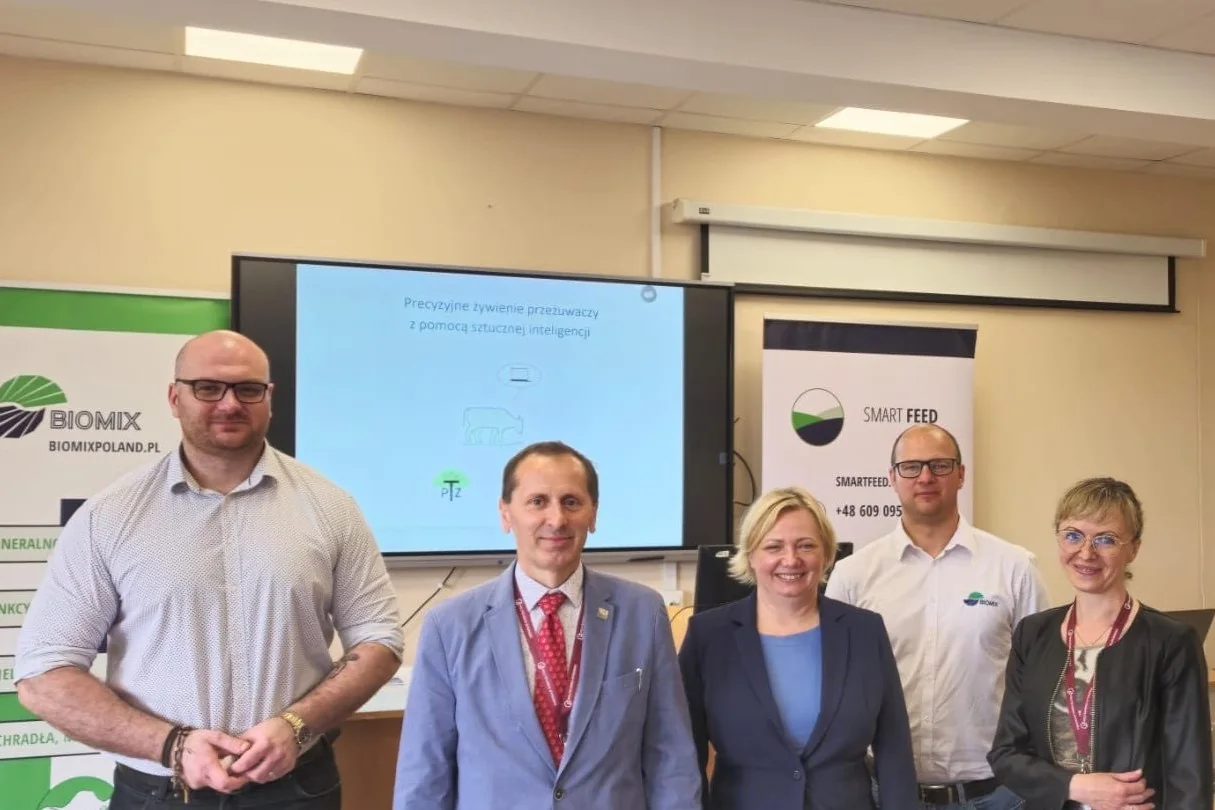
Presentation "The process of methanogenesis and artificial intelligence - the use of the Smart Feed application in feeding ruminants"
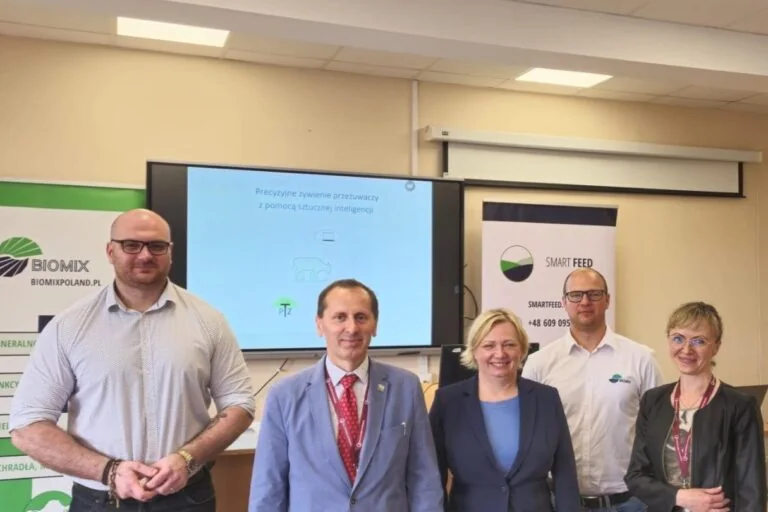
On May 23, 2024, a meeting devoted to "Precision feeding of ruminants using artificial intelligence" was held at Bydgoszcz University of Technology, organized by the Bydgoszcz Branch of the Polish Zootechnical Society. The meeting was divided into three thematic blocks, presenting the Smart Feed application, development plans and its use in modern agriculture.
Introduction
The presentation began with Renata Szwarc - CEO of Smart Feed, introducing the listeners to the widely discussed problems related to methane emissions and the impact of cattle breeding on global warming, which is responsible for 18% of greenhouse gas emissions. She emphasized the importance of developing new technologies, especially artificial intelligence, which can help in analyzing a range of data related to animal nutrition and dose balancing.
Register!Smart Feed through the eyes of the user
Mgr. engineer Łukasz Zamojdzin, nutrition specialist from Biomix Poland Sp. z o. o., presented the operation of the Smart Feed program, emphasizing its advantages, effects and great value, speaking
from the perspective of a farmer, nutritionist and user. He listed various features of Smart Feed such as: database of feed ingredients and the possibility of their personalization, composing your own feed and their parameterization, green mass calculator, arranging feed doses for various groups of animals with different needs, automatic dose generation, dose characteristics with parameters and economic analysis that determines feed efficiency and production profit. The speaker noted that the program is a tool that can significantly improve the process of precise animal nutrition management, leading to more effective and sustainable production.
Smart Feed development plans
Third speaker - Dr. Eng. Piotr Kliś, nutrition specialist - talked about development plans for the Smart Feed application. This includes developing algorithms to calculate the TMR/PMR feed ration with feed tables that will take into account the health of the cattle herd and reduce methane release. Research will be carried out on selected farms from all over Poland, with the participation of three scientific units UP in Poznań, Bydgoszcz University of Technology and UP in Lublin, veterinarians, nutritionists and others people involved in the project. Kliś emphasized the innovation of the study and the goal we want to achieve in feeding with PMR doses and suggesting feed tables according to individual needs.

To sum up, the presentation at the Bydgoszcz University of Technology showed how modern technologies can contribute to solving global problems related to greenhouse gas emissions. The use of artificial intelligence in the Smart Feed program is a step towards more sustainable and efficient agriculture, which can significantly reduce the impact of cattle breeding on the climate and contribute to the economic growth of the breeder.
Contact